Just five more pages… became my bedtime ritual: How e-readers quietly changed my nights
We’ve all been there—telling ourselves “just one more page” as the clock ticks past midnight. For years, I struggled to unwind, caught between screens that kept me alert and books that were hard to read in bed. Then I discovered how e-readers transformed not just my reading, but my entire bedtime rhythm. Gentle light, pocket-sized comfort, and a quiet companionship that fits perfectly into nighttime routines. It wasn’t a dramatic change, but a slow, gentle shift—one that made my evenings feel more like mine. No more eye strain, no more restless scrolling, just the steady rhythm of words that helped me breathe deeper, relax sooner, and sleep better. This little device didn’t replace my love for paper books. Instead, it gave me a new way to keep that love alive—without the guilt, the glare, or the late-night frustration.
The Last Scroll Before Sleep: How Evening Habits Shape Our Rest
Think about your last night before bed. What were you doing in those final moments? Chances are, you were staring at a screen—maybe scrolling through social media, catching up on emails, or watching one more episode of a show you didn’t even plan to start. We all do it. The day ends, and we tell ourselves we’re unwinding, but in reality, we’re still buzzing. Our brains are still processing notifications, images, and updates, long after we’ve turned off the lights. I used to be one of those people—the kind who’d lie in bed with my phone, promising myself “just five more minutes,” only to look up and realize an hour had passed. My eyes felt dry, my mind was racing, and sleep felt like a distant dream.
But here’s the thing: we’re not lazy or undisciplined for doing this. We’re just trying to reclaim a little time for ourselves. After a day of managing schedules, meals, laundry, and endless to-do lists, the quiet of the bedroom feels like the only space that belongs to us. We don’t want to stop thinking or feeling—we want to slow down, to escape, to reconnect with something that feels like *us*. That’s why so many of us turn to reading at night. It’s not just about the story; it’s about the ritual of stepping away from the noise and into a world where we can breathe again.
The problem isn’t the desire to read—it’s the tools we’ve been using. Phones and tablets, for all their convenience, are designed to keep us engaged, not relaxed. Their bright blue light suppresses melatonin, the hormone that helps us fall asleep. And the endless stream of content—messages, videos, news—pulls us into a cycle of distraction. Even if we open a book app, we’re just one tap away from opening Instagram or checking the weather. It’s like trying to meditate in a shopping mall. I tried switching back to physical books, which I love, but they came with their own challenges. Holding a heavy novel in bed after a long day? Not easy. Propping it up on a pillow while my arm falls asleep? Not comfortable. And trying to read under a dim lamp without waking my husband? Nearly impossible. I needed something that could meet me where I was—tired, emotional, and craving peace.
A Light You Can Live With: The Quiet Comfort of E-Ink at Night
That’s when I found e-ink. If you haven’t used an e-reader, you might think it’s just a smaller version of a tablet. But it’s not. E-ink technology is designed to mimic the look of printed paper. It doesn’t glow like a screen; instead, it reflects light the way real pages do. There’s no backlight unless you want one, and even then, it’s soft and directional—like a reading lamp built into the device. I remember the first time I turned on the warm light setting. It was like switching from a fluorescent office bulb to a cozy bedside lamp. The words were clear, the contrast was gentle, and my eyes didn’t feel strained after twenty minutes. I could read for an hour and still feel calm.
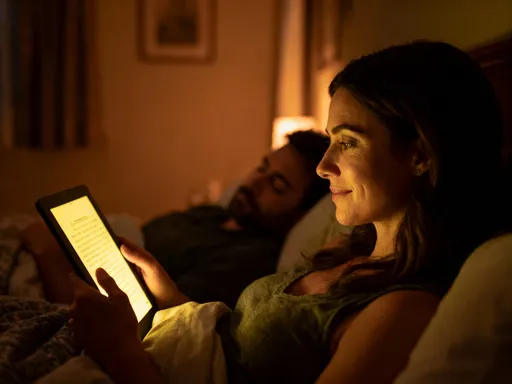
What surprised me most was how little it disturbed my husband. He’s a light sleeper, and even the glow from my phone used to bother him. But with the e-reader, I could read beside him without waking him up. The screen doesn’t cast light into the room—it only lights the page you’re looking at. It’s personal, intimate, almost private. I started to think of it as my little window into another world, one that didn’t intrude on the space we shared. And because the screen doesn’t flicker or pulse like a phone, it doesn’t keep my brain alert. There’s no constant refresh, no motion, no notifications. Just stillness. Just words.
I also love that I can adjust the warmth of the light. On colder nights, I shift it toward amber, which feels soothing, almost like candlelight. In the summer, I keep it neutral. It’s a small thing, but it makes a big difference. It’s like having a reading lamp that knows my mood. And because the screen has no glare, I can read from any angle—even lying on my side, which used to be impossible with a book. I don’t have to hold it perfectly straight or worry about shadows. It just works. I’ve even read in the early morning, while the kids were still asleep, with the room barely lit. The e-reader didn’t fight the darkness—it belonged in it.
From Clumsy to Cozy: Why Holding a Book in Bed Just Works Better Now
Let’s talk about comfort. How many times have you tried to read in bed only to drop the book, lose your page, or end up with a stiff neck? I used to prop my paperback against the headboard, only for it to slide down halfway through a chapter. Or I’d rest it on my chest, and my arms would get tired. Sometimes, I’d fall asleep mid-sentence, and the book would tumble to the floor, waking me up with a thud. It wasn’t relaxing—it was a workout. And don’t even get me started on reading with one hand while the other held a glass of water or adjusted the blanket. Physical books are beautiful, but they’re not always practical in bed.
The e-reader changed that. It’s lightweight—barely heavier than a magazine. I can hold it with one hand while the other rests under my pillow. I can tuck it under the covers when it’s cold. I can read lying on my side, on my back, even half-sitting up, and it never feels like a burden. And because it’s digital, I don’t have to worry about losing my place. A quick tap, and it remembers exactly where I left off. No bookmarks, no folded corners, no sticky notes. I can highlight a line I love with a swipe, and it saves it automatically. Later, I can go back and read all my favorite quotes in one place. It’s like having a personal reading journal built into the device.
One night, I was reading a novel that made me laugh out loud. My husband stirred and asked what was so funny. Instead of fumbling through pages to find the line, I just tapped “notes,” pulled up my highlights, and showed him the passage. He smiled, rolled over, and said, “Keep reading.” That moment meant something to me. It wasn’t just about convenience—it was about connection. The e-reader didn’t create distance; it made it easier to share what I was feeling. And because it’s so easy to use, I don’t dread picking it up. There’s no setup, no charging anxiety (most e-readers last weeks on a single charge), no waiting for pages to load. It’s always ready when I am.
Your Library, Your Pace: The Freedom of Choice Without Pressure
Here’s something I didn’t expect: the e-reader gave me permission to change my mind. I used to feel guilty about starting a book and not finishing it. I’d carry a novel around for weeks, forcing myself to read it even when I wasn’t enjoying it, just because I’d bought it or borrowed it from the library. There was this unspoken rule: once you start, you finish. But life is too short for that. And reading should feel like joy, not obligation.
With an e-reader, I can have ten books open at once. I can switch from a memoir to a mystery to a self-help book—all in one night, depending on my mood. If I’m feeling heavy, I’ll pick up something light. If I’m curious, I’ll dive into history. If I’m nostalgic, I’ll reread a novel from my twenties. And if a book isn’t working for me? I close it. No guilt. No waste. No clutter on my nightstand. I can delete it, or just leave it there, knowing it’s waiting if I ever want to try again. This freedom has made me a more adventurous reader. I take risks now—trying authors I’ve never heard of, genres I used to avoid. And because so many books are available at low cost or even free, I don’t feel like I’m wasting money.
My daughter noticed the change. One night, she asked, “Mom, why do you read so much now?” I told her it’s because I don’t have to choose just one story. I can follow my curiosity. She thought about it and said, “That’s kind of like how I feel when I pick a movie on my tablet.” But there’s a difference—my e-reader doesn’t suggest what to read next. It doesn’t autoplay the next chapter. It doesn’t track my data or sell it to advertisers. It’s quiet. It’s mine. I decide what to read, when to read, and when to stop. That sense of control is powerful. It’s not just about reading more—it’s about reading *better*, in a way that feels true to who I am.
Building a Ritual, Not a Habit: How Nightly Reading Became Something to Look Forward To
There’s a difference between a habit and a ritual. A habit is something you do automatically—like brushing your teeth or setting the alarm. A ritual is something you do with intention, with feeling. It’s not just about the action; it’s about what it means. For me, reading at night used to be a habit I kept breaking. Now, it’s a ritual I cherish. It’s the moment when I close the door on the day—the emails, the chores, the noise—and open a door to stillness.
I start the same way every night. I turn off the overhead light, adjust the warmth on my e-reader, and take a deep breath. Sometimes, I sip herbal tea. Other times, I just lie there for a minute, feeling the weight of the device in my hands. It’s small, but it holds so much. I’ve read novels that made me cry, memoirs that made me reflect, and essays that shifted the way I see the world. But more than the content, it’s the consistency that’s changed me. Because I know I’ll read every night, I’ve started to slow down earlier in the evening. I avoid heavy dinners. I stop checking my phone after 8 p.m. I create space for this moment, and in doing so, I’ve created space for myself.
I’ve noticed that I fall asleep faster now. Not because I’m more tired—but because I’m more at peace. The stories don’t keep me awake; they help me release the day. It’s like my mind has a place to go before it rests. And because I’m not fighting with my device or my book, I’m not frustrated. I’m not thinking, “I should be doing something else.” I’m just present. This ritual has become a form of self-care—one that doesn’t require a spa day or a weekend getaway. It’s available to me every single night, for as little as ten minutes. And those ten minutes add up. They’ve helped me feel more grounded, more like myself, even on the busiest days.
Shared Silence: Connecting with Loved Ones Through Quiet Time
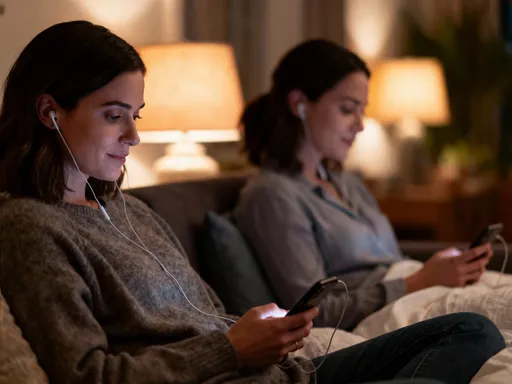
You might think that reading on a device would pull me away from my family. But the opposite has happened. On weeknights, my husband and I now have a routine. After the kids are in bed, we sit together in the living room or lie side by side in bed, each with our own e-reader. We don’t talk much. We don’t need to. We’re just there, sharing the quiet. Sometimes, one of us will read a line aloud. Other times, we’ll glance up and smile, knowing we’re both in our own worlds but still together. It’s a kind of companionship that doesn’t need words.
I love that our children see this. They see us reading, not scrolling. They see us choosing stories over screens. And sometimes, they join us. My younger daughter will curl up with her tablet, reading a children’s book app, while my husband reads history and I read fiction. We’re all doing different things, but we’re doing them together. It’s not forced family time—it’s organic, peaceful, and full of presence. The e-reader hasn’t replaced conversation, but it’s given us a new way to be close without pressure. We’re not performing. We’re just being.
Even when I read alone, I feel connected. There’s something intimate about holding a device that carries the voices of so many writers—people who’ve shared their thoughts, their pain, their joy, just for me to find. I think of the author who wrote late at night, hoping someone would read their words. I think of the librarian who recommended a title I later found on my e-reader. I think of my sister, who texted me last week to say she started the same novel I just finished. We didn’t plan it. We just both needed that story at the same time. Technology, in this small way, has helped me feel less alone.
More Than a Device: How a Simple Tool Helped Me Reclaim My Evenings
Looking back, I realize the e-reader didn’t just change how I read—it changed how I live. It helped me break free from the cycle of late-night scrolling. It gave me a reason to put my phone down. It made bedtime something to look forward to, not something I rushed through. I sleep better. I’m calmer. I feel more in control of my time and my attention. And I’ve rediscovered a love for reading that I thought I’d lost in the busyness of adulthood.
But more than that, it’s reminded me that small choices matter. I didn’t need a big overhaul—a digital detox, a meditation app, a life coach. I just needed one thoughtful tool that fit into my life, not against it. The e-reader didn’t demand change; it invited it. It met me with kindness, with simplicity, with quiet. And in return, I gave it my time, my focus, my trust.
Now, when I say “just five more pages,” I mean it. I read those five pages, I close the device, I set it down, and I fall asleep. No struggle. No guilt. Just peace. And in a world that never stops moving, that’s a gift. It’s not about the technology—it’s about what it makes possible. It’s about creating space for stillness, for stories, for self. If you’ve been searching for a way to slow down, to reconnect with reading, to reclaim your evenings, I hope you’ll give it a try. Not because it’s perfect, but because it’s gentle. And sometimes, that’s exactly what we need.