From Overwhelmed to Fully Present: How Virtual Reality Gave Me Back My Evenings
Imagine coming home after a long day, mentally drained but craving *real* relaxation—not just scrolling, not another show, but something that truly resets your mind. I felt the same, until I tried virtual reality not as a game, but as a daily reset button. No hype, no tech jargon—just calm, clarity, and moments of joy I hadn’t felt in years. This isn’t about escaping life. It’s about returning to it, refreshed. And if you’ve ever sat on the couch after dinner, staring at your phone but not really seeing it, wondering where the peace went—this might be the gentle shift your evenings have been missing.
The Evening Burnout No One Talks About
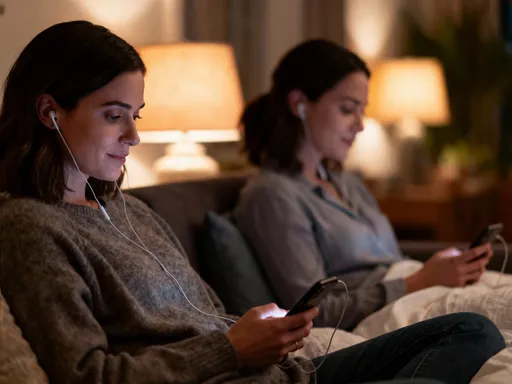
Let’s be honest—most of us don’t truly unwind at night. We collapse. We sit down after a full day of managing work, meals, messages, and family needs, hoping to relax. But instead of feeling better, we feel heavier. Our eyes are tired, our thoughts are scattered, and our hearts are just… full. Not in a good way. Full of everything we didn’t get to, everything we’re worried about, everything we’ll probably do tomorrow. And what do we reach for? The phone. Another episode. A quick scroll. But the glow of the screen doesn’t soothe us. It just adds more noise. More input. More to process.
I used to think this was just how adulthood felt—like you’re always carrying a low-level hum of stress. Like peace was something you earned on vacation, not something you could access on a Tuesday. I’d tell myself, ‘Just five more minutes,’ only to look up an hour later, still tense, still mentally miles away from my living room. The irony? I was physically home, but emotionally and mentally, I wasn’t really *there*. Not with my kids, not with my partner, not even with myself. I was stuck in a loop of mental clutter, and I didn’t know how to break it.
And I know I’m not alone. So many women I talk to—moms, professionals, caregivers—say the same thing: ‘I’m so tired, but my brain won’t shut off.’ We’re not lazy. We’re not ungrateful. We’re just running on fumes, trying to refill the tank with things that don’t actually fuel us. We need something different. Something that doesn’t ask for more time, more effort, or more decisions. We need a way to *step out* of the mental noise, even for a few minutes, so we can come back to our lives with softer eyes and a quieter mind.
My First Hesitant Try: VR as More Than Gaming
I’ll admit it—I didn’t think virtual reality was for me. When I saw people with headsets on, flailing their arms in the living room, I assumed it was all about action games and digital battles. Not exactly my idea of relaxation. So when my friend Lisa handed me her VR headset one evening and said, ‘Try this instead of your usual Netflix loop,’ I almost laughed. ‘I’m not shooting aliens,’ I said. ‘No,’ she smiled. ‘You’re going to sit by a lake in the mountains.’
Skeptical but too tired to argue, I put it on. And within seconds, I wasn’t in my living room anymore. I was standing on a wooden dock, water gently lapping below, mist rising off the lake, pine trees all around. The sun was just coming up, golden light filtering through the trees. I could hear birds, the soft rustle of leaves, even the distant call of a loon. I didn’t have to do anything. No buttons, no instructions. I just stood there, breathing. And something in me—something I hadn’t realized was clenched—let go.
That moment changed everything. I wasn’t playing a game. I wasn’t watching a screen. I was *in* a place. A quiet, beautiful, peaceful place. And for the first time in a long time, my brain stopped racing. I wasn’t thinking about my to-do list, my unanswered emails, or the pile of laundry upstairs. I was just *there*. Present. Calm. And when I took the headset off ten minutes later, I didn’t feel disoriented. I felt… reset. Like I’d taken a mini-vacation in my own home. That night, I slept deeper. The next day, I felt lighter. And I knew—I needed to try this again.
How Just 10 Minutes Can Reset Your Nervous System
Here’s the thing I didn’t expect: VR isn’t just a distraction. It actually helps your body relax. I know that sounds too good to be true, but there’s real science behind it. When you’re stressed, your nervous system is in ‘fight or flight’ mode—your heart rate goes up, your muscles tense, your mind races. But when you’re in a calm, peaceful environment—like a quiet forest or a beach at sunset—your body starts to shift into ‘rest and digest’ mode. Your breathing slows, your heart rate drops, and your brain waves change. You start to heal, even if you’re just sitting still.
Now, you might be thinking, ‘But I can just look at a nature photo or play a calming playlist.’ And yes, those help. But VR is different because it’s *immersive*. It fills your field of vision, your hearing, even your sense of space. Your brain doesn’t just *see* the lake—it *believes* you’re there. And that’s powerful. Studies have shown that even short sessions in calming virtual environments can reduce cortisol, the stress hormone, and improve mood. It’s like giving your brain a mini-retreat, every single night.
And the best part? You don’t need an hour. Ten minutes is enough. That’s less time than it takes to fold a load of laundry. I started doing it right after dinner—before I’d normally pick up my phone. I’d put on the headset and step into a quiet garden, a cozy cabin, or a beach with gentle waves. No pressure to ‘do’ anything. Just be. And over time, those ten minutes added up. I started noticing I wasn’t as reactive. When my kids argued over toys, I didn’t snap. When work got hectic, I didn’t spiral. I had a buffer now—a quiet space I could return to, mentally, even when life was loud.
Making It Part of Your Routine—Without the Hassle
I know what you’re thinking: ‘This sounds nice, but I don’t have time to figure out tech.’ And I get it. The last thing we need is another complicated gadget that collects dust. But here’s the truth—using VR for relaxation is *easier* than most people expect. It’s not like setting up a home theater or learning a new app. It’s more like brewing a cup of tea. Simple. Intentional. Soothing.
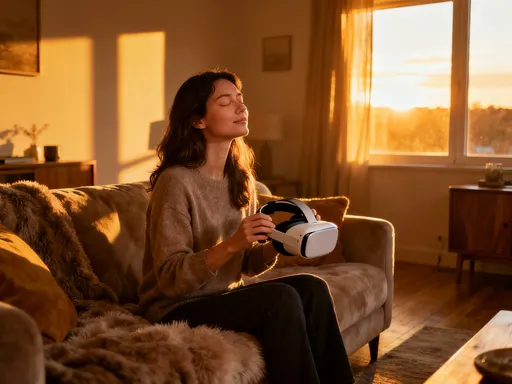
Here’s how I made it work: First, I chose a comfortable headset. I didn’t go for the most advanced one—just one that felt light, had good sound, and was easy to clean. I store it on the side table next to my favorite chair, so I see it every evening. No digging through boxes. No charging panic. I plug it in while I’m making dinner, so it’s ready when I am. And the apps? I stick to a few that are designed for relaxation—no games, no complex menus. Just peaceful scenes you can enter with one click.
Then I tied it to a habit I already had. For me, it’s after I finish the dishes. That used to be the moment I’d grab my phone and start scrolling. Now, I put on the headset instead. It’s become my signal to my brain: ‘The work of the day is done. Time to reset.’ I don’t force it. Some nights I skip it, and that’s okay. But most nights, it’s become as natural as brushing my teeth. The key was making it *easy*—low effort, high reward. Because if it feels like a chore, it won’t last. But if it feels like a gift, you’ll keep coming back to it.
Surprising Ways VR Improved My Daily Life
I started using VR to relax, but I didn’t expect the ripple effects. Within a few weeks, I noticed I was sleeping better. Not just longer—deeper. I wasn’t waking up as often, and I didn’t feel groggy in the morning. My mind felt clearer, like I’d given it a chance to rest properly. And that clarity spilled into my days. I was more focused during work calls. I remembered things better. I even started enjoying my hobbies again—something I hadn’t realized I’d stopped doing.
But the biggest change was in my relationships. I was more patient. With my kids, with my partner, with myself. There’s a moment I’ll never forget: my daughter spilled her juice on the carpet, and instead of reacting with frustration, I took a breath and said, ‘It’s okay. We’ll clean it up.’ And I meant it. That wouldn’t have happened before. I would’ve snapped, then felt guilty. But now, I had this quiet space inside me—a reservoir of calm I could draw from. I wasn’t just managing stress. I was transforming it.
And I’m not the only one. A friend of mine started using VR to wind down after her nursing shifts. She said it helped her transition from the intensity of the hospital to being present with her family. Another woman in my book club uses it before bed to quiet her mind after a day of homeschooling her kids. She said, ‘It’s like I’m reclaiming my mental space.’ These aren’t dramatic changes. They’re small, subtle shifts. But they add up to a life that feels more balanced, more joyful, more *yours*.
Choosing the Right Experience for Your Mood
One of the most beautiful things about VR is that it can meet you where you are. Some nights, I need deep calm—so I choose a quiet forest or a lakeside cabin. Other nights, I’m restless, and I want something gentle but engaging—like a slow float through a glowing garden with soft music. The key is learning what your body and mind need, and matching the experience to that.
Think of it like a playlist for your emotions. Feeling anxious? Try a guided breathing session in a peaceful meadow. Need a little energy? Step into a sunny garden with birdsong and a warm breeze. Want to feel cozy? Choose a virtual fireplace with soft rain outside the window. The options aren’t about flashy graphics or high-tech features—they’re about *feeling*. About creating a space that helps you breathe, rest, or recharge in the way you need most.
And you don’t have to get it ‘right.’ There’s no perfect choice. Some nights, I pick a scene just because the name sounds nice. ‘Whispering Pines.’ ‘Golden Hour.’ ‘Still Waters.’ And that’s enough. The act of choosing something soothing—of giving yourself permission to pause—is part of the healing. Over time, you start to learn your rhythms. You begin to recognize when you need stillness, when you need gentle movement, when you just need to *be*. And that awareness—that self-knowledge—is one of the greatest gifts of all.
Why This Isn’t Escapism—It’s Reconnection
I used to worry that VR was just another way to avoid real life. That by stepping into a virtual world, I was turning away from my family, my responsibilities, my truth. But the opposite has happened. By giving myself ten minutes of real mental peace, I come back to my life more present, more patient, more *me*. I’m not hiding. I’m healing. I’m filling my cup so I can show up fully—for my kids, my work, my dreams.
This isn’t about replacing real experiences with digital ones. It’s about using technology to support our humanity. To give us the rest we need so we can live with more joy, more love, more intention. Because peace isn’t something we find only on vacation or in silence retreats. It’s something we can cultivate, night after night, in the middle of our busy lives. And sometimes, the tool that helps us get there isn’t a journal or a meditation app—it’s a pair of goggles that takes us to a quiet beach, a mountain trail, or a starlit garden.
So if you’re feeling overwhelmed, if your evenings feel like a blur of tasks and screens, if you miss the feeling of true calm—know this: you don’t have to wait for everything to change. You don’t need more time, more energy, or more willpower. You just need ten minutes. And a little courage to try something new. Because peace isn’t far away. It’s closer than you think. And it might be waiting for you, just behind a simple headset, ready to bring you back to yourself.