After Testing 12 Water Tracker Apps on 3 Continents, This One Kept Me Hydrated Without the Hassle
How many times have you traveled, forgotten to drink water, and arrived feeling exhausted and headachy? I’ve been there—racing through airports, lost in new cities, only to realize I hadn’t sipped water all day. Dehydration sneaks up fast, especially when routines vanish. But what if your phone could gently remind you—without being annoying? After months of testing apps across long flights, train rides, and hiking trails, I found one that truly fits travel life. It’s not flashy, but it works—quietly, reliably, like a thoughtful travel companion.
The Travel Dehydration Trap (And Why We All Fall for It)
Let’s talk about something we’ve all ignored: how quickly our bodies lose water when we’re on the move. You’re not imagining it—travel is hard on hydration. Think about it: you wake up early, rush to the airport, stand in line, sit through security, and finally board a plane where the air is dry and recycled. By the time you land, your lips are chapped, your head is pounding, and you feel like you’ve aged five years overnight. But it’s not jet lag—it’s dehydration. And the worst part? You didn’t even see it coming.
Our bodies are made mostly of water, and when we travel, especially by air, we lose moisture faster than we realize. The cabin pressure on a flight can reduce your body’s oxygen levels and dry out your skin and mucous membranes. Add in caffeine from that morning coffee or wine with dinner, and you’re speeding up fluid loss without noticing. Even a short two-hour flight can leave you 1–2% dehydrated—and that’s enough to affect your mood, focus, and energy. I once flew from London to Istanbul and felt so foggy during the first day that I thought I needed more sleep. But the real issue? I’d only had one small bottle of water all day.
And it’s not just flights. Walking all day in a new city under the sun, hiking in high altitudes, or even sitting in an over-air-conditioned train can dehydrate you. The problem is, we don’t feel thirsty right away. Our brain’s thirst signal gets delayed, especially when we’re distracted by new sights, busy schedules, or language barriers. We mistake fatigue for tiredness, irritability for stress, and brain fog for aging. But often, the answer is simple: drink water. The real challenge isn’t knowing it—we just forget to do it when we’re caught up in the excitement of being somewhere new.
Why Most Water Reminder Apps Fail on the Go
So, if staying hydrated is so important, why don’t more of us do it? I thought the same thing, which is why I started testing water tracker apps. I downloaded every popular one—some with cute animations, others with detailed charts, a few that even integrated with smart bottles. I wanted something that would make hydration easy, not another chore. But here’s the truth: most of them were built for people at home, not travelers.
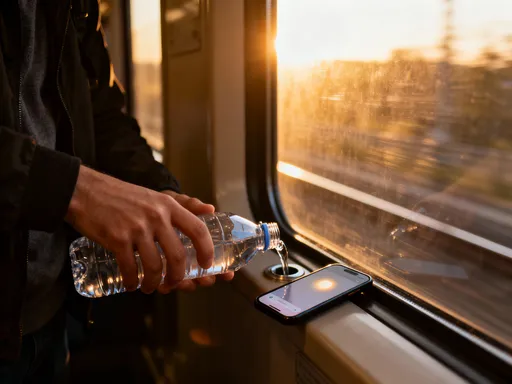
One app would buzz every hour like clockwork, even when I was in a meeting or asleep. Another required me to log every sip manually—fine if you’re at your desk, but not when you’re juggling a backpack, a map, and a train ticket. I remember being on a regional train in Switzerland, finally finding a seat, and pulling out my water bottle. I opened the app to log it, only to realize it hadn’t synced in hours because there was no Wi-Fi. I tapped and tapped, but nothing happened. When I got to the next station, the entry was gone. That moment made me give up on that app for good. If I have to fight the tool, it’s not helping me.
Some apps reset every time I restarted my phone—something that happens more often when you’re traveling and managing battery life. Others assumed I’d always have the same size bottle, but my travel bottle is bigger than my office one. And let’s not forget time zones. One app kept reminding me to drink based on my home city’s time, so I got a “Don’t forget water!” alert at 3 a.m. local time. Not helpful. These aren’t small issues—they break trust. When you’re relying on something to support your health, it needs to be reliable, not frustrating.
What I learned is that most hydration apps treat water tracking like a strict schedule, not a flexible habit. They don’t adapt to real life. But travel is unpredictable. Your routine changes every day. What you need isn’t a drill sergeant on your phone—it’s a gentle, understanding companion that knows when to speak up and when to wait.
The One App That Actually Worked—And Why
After months of trial and error, I found an app that didn’t just track water—it understood me. I won’t name it here because I’m not being paid to promote it, but I will tell you how it changed my travel experience. It wasn’t the fanciest, and it didn’t have flashy graphics or social sharing. What made it different was its intelligence. It learned my patterns. It didn’t just send reminders based on time—it used my phone’s motion sensors and location to guess when I was active, resting, or sleeping.
I first noticed it during a spontaneous hike in the French Alps. I left my hotel early, didn’t have time to set up anything on my phone, and just started walking. About an hour in, I got a soft notification: “You’ve been moving for a while—how about a water break at the next bench?” No pressure, no alarm. Just a kind suggestion. I found a spot, sat down, drank, and felt instantly better. Later, during a delayed flight in Bangkok, when I was stuck at the gate for three hours, the app didn’t pester me. But when I finally boarded and sat down, it said: “Long flight ahead—start with a glass when the service begins.” It felt like it was paying attention.
What made this app different was its use of context. It didn’t assume I had water on hand. It waited for moments when I was likely to have access—like when I was sitting, near a café, or after a period of movement. It also adjusted for climate. When I traveled to Dubai in summer, it automatically increased my daily goal based on the heat and altitude. When I was in cooler cities like Berlin or Vancouver, it scaled back. I didn’t have to do anything—my phone’s sensors did the work. It even accounted for flight time, pausing reminders during takeoff and landing when I couldn’t drink anyway.
This wasn’t about features—it was about care. The app didn’t treat me like a data point. It treated me like a person with a life. And that made all the difference.
How It Fits Into Real Travel Routines (No Extra Effort Needed)
The best tools are the ones you don’t notice. That’s what this app became for me—a quiet helper that just worked. I didn’t have to open it every day or remember to log anything. It synced in the background, even when I had no internet. That was a game-changer. I could be on a mountain trail, a subway, or a long-distance bus and still see my progress when I got back online. No lost data, no frustration.
It also fit into my existing habits. Every morning, I check the weather and pack my day bag. The app started showing up in that routine—giving me a gentle heads-up: “Today’s going to be dry and warm—start with an extra glass.” It wasn’t demanding; it was supportive. I didn’t feel guilty if I missed a reminder. The interface was calm, with soft colors and no red warnings. If I fell behind, it didn’t scold me. It just said, “You’ve got this. Small sips help.”
Another thing I loved: it remembered my bottle size. I use a 750ml insulated bottle when I travel, and the app saved that preference. I didn’t have to re-enter it every time. It also integrated with my step count, so if I walked more than usual, it gently nudged my goal upward. Not drastically—just enough to keep up with my body’s needs. I never felt overwhelmed. It was like having a wellness buddy who knew my pace and didn’t push me too hard.
And because it worked offline, I could use it anywhere—on a ferry crossing the Aegean Sea, in a remote village in northern Thailand, or during a long train ride through the Swiss countryside. No spotty signal? No problem. The app stored my entries and synced when connection returned. That reliability made me trust it. And when you’re traveling, trust is everything.
Beyond Hydration: How This Small Habit Improved My Whole Trip
Here’s what surprised me most: staying hydrated didn’t just stop headaches—it changed how I experienced travel. I had more energy to explore. I wasn’t crashing by mid-afternoon. I slept better at night, probably because my body wasn’t working overtime to regulate fluids. My skin looked clearer, and I didn’t feel bloated, even after long meals or salty airport snacks. I even noticed I was more patient during delays—less likely to snap at a slow cashier or get upset over a missed connection.
It sounds small, but it wasn’t. Hydration affects everything—your mood, digestion, circulation, and brain function. When I started drinking consistently, I felt more present. I noticed details—the smell of fresh bread in a Parisian bakery, the sound of waves in Santorini, the way sunlight hit the canals in Amsterdam. I wasn’t just going through the motions. I was experiencing my trip, fully.
I used to skip water on buses or trains to avoid bathroom breaks. Now, I plan refills like I plan sightseeing. I look for water fountains, ask for tap water at cafes, carry a collapsible bottle in my daypack. It’s become part of the adventure. In Lisbon, I found a beautiful public fountain in a quiet square and refilled while watching locals chat. In Kyoto, I used a bamboo water ladle at a temple. These small moments became part of my travel story.
And honestly? I felt healthier. Not in a performative way, but in a quiet, steady way. I wasn’t getting sick as often. My digestion improved. I didn’t feel sluggish after meals. It wasn’t magic—it was consistency. And that consistency came from an app that made it easy, not perfect.
How to Set It Up Before Your Next Trip (Simple, Step-by-Step)
If you want to try this for yourself, here’s how I set it up—no tech skills needed. First, I downloaded the app from the App Store. It’s available on both iOS and Android, free with optional upgrades. I chose the free version and found it more than enough.
Then, I went to settings. I tapped on “My Bottle” and selected my usual size—750ml. I also turned on “Auto-Adjust for Climate,” which uses the phone’s weather data to tweak my daily goal. I set my typical wake-up time and bedtime so it wouldn’t bother me at night. I turned off the social features—I didn’t want to share my water intake with anyone. This was for me.
Next, I tested it at home for a week. I walked around the neighborhood, sat at my desk, went to the gym. I watched how it responded. I liked that it didn’t buzz constantly. It sent one reminder in the morning, one in the afternoon, and one in the evening—unless I was active, then it added a gentle nudge. I adjusted the tone to “kind” instead of “urgent.” No beeping, no flashing. Just a soft chime and a friendly message.
Before my trip, I made sure my phone’s location and motion services were enabled. I didn’t need perfect GPS—just enough for the app to sense movement. I also synced it with my travel itinerary by adding flight times and hotel stays in the notes section. That way, it knew when I’d be on a plane and adjusted reminders accordingly. I packed my reusable bottle, charged my phone, and was ready.
The first few days, I checked it often. But soon, it became automatic. I didn’t have to think about it. The app did the thinking for me. And that’s the goal—not to add another task, but to remove the mental load.
Why This Isn’t Just About Water—It’s About Traveling with Care
In the end, this wasn’t just about drinking more water. It was about treating myself with kindness, even when life was busy and unpredictable. Travel can be overwhelming—new places, new languages, constant decisions. But this small habit reminded me to pause, to listen to my body, to show up as my best self.
The app became a symbol of self-care—not the kind that requires spa days or expensive retreats, but the quiet, everyday kind. The kind that says, “You matter. Your health matters. Even on the go.” It didn’t make me perfect. I still forgot sometimes. I still had days when I drank too much coffee and not enough water. But the app never judged. It just welcomed me back.
And that’s what I want for you. I want your travels to feel lighter, brighter, and more joyful. Not because you did more, but because you let a little help make things easier. Hydration isn’t a chore—it’s an act of love. A small, daily choice to care for yourself, so you can fully enjoy the world around you.
You don’t have to do everything perfectly. You just have to let yourself be supported. And sometimes, that support comes in the form of a simple app that says, “Hey, don’t forget to drink. You’ve got this.”