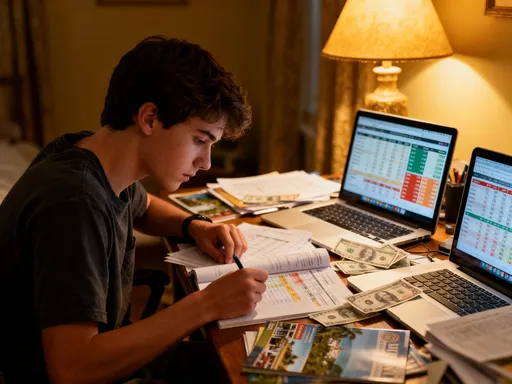
How We Mastered Our Money as a DINK Family — Real Investment Moves That Work
What happens when two incomes meet no kids, but still feel like you’re not getting ahead? We were there—earning well, saving harder, yet our money wasn’t working for us. As a DINK (Dual Income, No Kids) couple, we realized our financial advantage could vanish without smart moves. This is how we shifted from just saving to truly investing—with real strategies, a few missteps, and lessons we wish we’d known sooner. At first, we thought high income meant financial success. But without direction, even two good salaries can disappear into rent, dining out, and weekend getaways. We began asking: How do we turn what we earn into lasting wealth? The answer wasn’t in earning more—it was in managing what we already had, differently.
The DINK Advantage: Why Two Incomes Can Build Wealth Faster
Being part of a DINK household offers a unique financial opportunity—one that many don’t fully recognize until it’s too late. With two steady incomes and no immediate child-related expenses, couples in this situation often have significantly higher disposable income than their peers. This creates a powerful window for wealth accumulation, especially in the early to mid-career years. Unlike families with children, who must allocate large portions of income toward education, childcare, and daily needs, DINK couples can direct more of their earnings toward savings, investments, and long-term goals.
However, having the advantage doesn’t guarantee results. Many dual-income couples fall into the trap of assuming that because they’re not spending on children, they are automatically building wealth. The reality is more complex. Without deliberate planning, extra income tends to be absorbed by lifestyle inflation—larger apartments, newer cars, more frequent travel, and premium subscriptions. These choices aren’t inherently bad, but when they grow unchecked, they erode the very financial flexibility that makes the DINK lifestyle so promising.
What sets successful DINK couples apart is intentionality. They treat their financial edge not as permission to spend more, but as a rare chance to invest early and consistently. Because they typically face fewer immediate financial obligations, they can afford to take on calculated investment risks that may yield higher returns over time. They also have greater flexibility in career choices—such as pursuing lower-paying but fulfilling roles or taking sabbaticals—because their financial foundation is stronger. This freedom, however, only exists if they build it deliberately.
Another underappreciated benefit is the ability to maximize tax-advantaged accounts. With two earners, both partners can fully fund retirement accounts like 401(k)s or IRAs, effectively doubling the annual contribution potential. Over decades, this compounding effect can result in hundreds of thousands of dollars in additional retirement savings. Yet, many couples fail to take full advantage of these tools, either due to lack of awareness or procrastination. The DINK advantage isn’t just about earning more—it’s about using that income strategically to create long-term security and optionality.
Where We Went Wrong: Common Money Traps for DINK Couples
Despite our strong incomes, we weren’t immune to financial missteps. Like many DINK couples, we assumed that because we weren’t spending on children, we were automatically on solid ground. But after reviewing our finances, we realized that most of our extra income was quietly vanishing into everyday comforts and habits. We upgraded our apartment shortly after moving in together, choosing a higher rent for a better view and gym access. We dined out several times a week, not out of necessity, but because we enjoyed it and could afford it. Weekend trips, designer clothes, and premium streaming services added up—slowly, silently, and without clear purpose.
This phenomenon is known as lifestyle inflation—the tendency to increase spending as income rises. For DINK couples, it’s especially insidious because there’s often no external pressure to control it. Without children or major debt, there’s little immediate consequence to overspending. The bank account still looks healthy, and the credit cards remain paid off. But over time, this pattern prevents meaningful wealth accumulation. We were saving money, yes—but mostly in low-yield savings accounts that barely kept pace with inflation. Our assets weren’t growing; they were just sitting, idle and underutilized.
Another trap we fell into was emotional spending driven by a lack of clear financial goals. Because we didn’t have children to plan for, traditional milestones like college funds or home upgrades didn’t apply. We didn’t have a strong sense of what we were saving for, so our motivation to invest wisely was weak. Instead, we focused on short-term pleasures—nice dinners, spontaneous trips, the latest gadgets. These weren’t extravagant by luxury standards, but they were consistent and cumulative. We mistook comfort for progress and assumed that financial stability meant we were doing well.
Perhaps the most dangerous illusion was the belief that high income equaled financial security. We earned well, lived below our means in relative terms, and had no debt. On paper, we looked responsible. But we weren’t building real wealth. We had not yet learned the difference between saving and investing. Saving protects money; investing grows it. Without a shift in mindset, we risked reaching our 50s or 60s with solid incomes but underdeveloped assets—still dependent on our jobs, with no passive income to support a different lifestyle. Recognizing these traps was the first step toward change.
Building Your Investment Mindset: From Fear to Action
Transitioning from saving to investing required more than just financial knowledge—it demanded a shift in mindset. For years, we viewed the stock market with suspicion, associating it with risk, unpredictability, and loss. News headlines about market crashes and volatile swings only reinforced our hesitation. We preferred the safety of savings accounts, even though we knew the returns were minimal. The idea of putting our hard-earned money into something we couldn’t control felt uncomfortable, even reckless. But we eventually realized that avoiding risk wasn’t protecting us—it was costing us in lost growth opportunities.
Overcoming this fear began with education. We started reading reputable financial publications, listening to expert podcasts, and reviewing long-term market data. One statistic stood out: despite short-term fluctuations, the stock market has historically delivered average annual returns of around 7% to 10% over extended periods. This didn’t guarantee future results, but it helped us reframe risk. We began to see market volatility not as a threat, but as a normal part of long-term investing. Just as a home’s value can rise and fall over time, so can an investment portfolio—and staying invested through ups and downs is often the key to growth.
Another barrier was confusion about where to start. The financial world is full of options—individual stocks, mutual funds, ETFs, real estate, bonds, and more. The abundance of choices led to analysis paralysis. We worried about picking the wrong investment or missing out on a better opportunity. What helped was simplifying our approach. We decided to focus on broad-market index funds, which offer instant diversification and low fees. These funds track major market indices like the S&P 500, allowing us to own a piece of hundreds of companies with a single investment. This reduced the pressure to pick winners and minimized our exposure to any single company’s failure.
The turning point came when we redefined our relationship with money. Instead of seeing it as something to be hoarded or spent, we began to view it as a tool for building future freedom. We asked ourselves: What kind of life do we want in 20 or 30 years? Early retirement? More travel? The ability to support aging parents? Starting a business? These goals gave our investing efforts purpose. We realized that emotional discipline—staying the course during downturns, avoiding impulsive decisions, and maintaining consistency—was just as important as financial knowledge. Investing wasn’t about getting rich quickly; it was about making steady, informed choices that compound over time.
Our Core Strategy: Balancing Growth and Safety
Once we committed to investing, the next step was designing a strategy that aligned with our goals, timeline, and risk tolerance. We knew we didn’t want to chase high-risk, high-reward schemes, but we also didn’t want to be so conservative that our money barely grew. Our solution was a balanced, diversified portfolio that combined growth-oriented and stability-focused assets. This approach allowed us to participate in market gains while protecting against severe losses.
We structured our portfolio around three main components: equity investments, fixed-income assets, and real estate exposure. For equities, we allocated the majority of our investable funds to low-cost index funds that track broad market indices. These included a U.S. total stock market fund and an international equity fund, ensuring geographic diversification. We chose index funds because they historically outperform most actively managed funds over the long term, and their low expense ratios mean more of our returns stay in our pockets.
For stability, we invested in bond funds and Treasury securities. These assets tend to be less volatile than stocks and can provide steady income, especially during market downturns. While their returns are generally lower, they play a crucial role in smoothing out portfolio performance. We adjusted our bond allocation based on our age and risk tolerance, gradually increasing it as we moved closer to our long-term goals. This strategy, known as a glide path, helps reduce exposure to market swings over time.
We also added real estate to our portfolio through a real estate investment trust (REIT) fund. This allowed us to gain exposure to property markets without the burden of managing physical homes. REITs have historically provided strong returns and serve as a hedge against inflation, since property values and rents tend to rise with the cost of living. Including this asset class improved our overall diversification and reduced our reliance on stock market performance alone.
One of the most important practices we adopted was regular portfolio rebalancing. Over time, some investments grow faster than others, shifting the original allocation. For example, if stocks perform well, they may become a larger portion of the portfolio than intended, increasing risk. We set a rule to review our portfolio every six months and realign it to our target percentages. This disciplined approach keeps us on track and prevents emotional decisions during market extremes.
Smart Moves That Saved Us Time and Money
As busy professionals, we knew we couldn’t spend hours managing our investments every week. We needed a system that was effective but efficient. The key was automation. We set up automatic transfers from our checking accounts to our investment accounts each payday. This ensured consistency and removed the temptation to delay or skip contributions. Over time, this habit became seamless—money flowed into our portfolio before we even had a chance to spend it.
We also maximized our use of tax-advantaged accounts. Both of us contributed the maximum allowed to our 401(k) plans each year, taking full advantage of employer matches when available. We opened Roth IRAs and funded them annually, knowing that qualified withdrawals in retirement would be tax-free. These accounts not only reduced our taxable income today but also allowed our investments to grow without annual tax drag. The compounding effect of tax-free growth over decades can be substantial, especially for high earners who expect to remain in a high tax bracket even in retirement.
Another critical move was minimizing fees. We learned that even small differences in expense ratios can have a massive impact over time. For example, a fund with a 1% annual fee can cost tens of thousands of dollars more than a similar fund with a 0.1% fee over 30 years. We switched to low-cost index funds and avoided investments with high management fees or hidden charges. We also reviewed our account statements regularly to ensure no unexpected fees were being deducted.
Timing also mattered. We avoided trying to time the market—a common but flawed strategy. Instead, we used dollar-cost averaging, investing a fixed amount at regular intervals regardless of market conditions. This approach reduces the risk of investing a large sum just before a downturn and allows us to buy more shares when prices are low. It’s not flashy, but it’s proven to work over the long term. These small, smart moves didn’t require extra income—just discipline and attention to detail. Together, they created a foundation for sustainable wealth growth.
Risk Control: Protecting What We’ve Built
Investing isn’t just about growth—it’s also about preservation. No matter how well a portfolio performs, one major financial setback can undo years of progress. That’s why risk control became a cornerstone of our strategy. We started by building a robust emergency fund, equivalent to six months of living expenses, held in a high-yield savings account. This fund acts as a financial buffer, allowing us to cover unexpected costs—like medical bills, car repairs, or job loss—without touching our investments.
We also reviewed our insurance coverage carefully. While we were both employed and had health insurance through our jobs, we considered additional protections. We increased our life insurance coverage to ensure that if one of us passed away, the other would remain financially secure. We also looked into disability insurance, which would replace a portion of our income if either of us became unable to work due to illness or injury. These policies aren’t meant to generate returns—they’re meant to prevent financial disaster.
Another layer of protection was setting clear investment rules. We defined our risk tolerance and stuck to it, avoiding the temptation to chase hot stocks or panic-sell during market drops. We established criteria for when to sell an investment—such as a significant change in fundamentals or a shift in our financial goals—rather than reacting to emotions. This discipline helped us stay focused on the long term.
We also diversified beyond asset classes. We made sure our income wasn’t overly dependent on a single employer or industry. Both of us maintained strong professional networks and kept our skills updated, increasing our employability even in uncertain economic times. We viewed financial resilience as a combination of smart investing, adequate insurance, and career flexibility. Protecting our wealth wasn’t about avoiding all risk—it was about managing it wisely so we could stay in the game and continue growing.
Looking Ahead: Wealth with Purpose
Today, our finances feel different. We’re no longer just earning and saving—we’re building something meaningful. Our investments are growing, our emergency fund is strong, and we have a clear sense of where we’re headed. We’ve started talking about early retirement, not because we want to stop working, but because we want the freedom to choose how we spend our time. We dream of traveling more, supporting family members when needed, and possibly starting a small business that aligns with our values.
What we’ve learned is that wealth isn’t just about numbers in an account. It’s about options. It’s about the ability to say yes to opportunities and no to obligations that don’t serve us. For DINK couples, this sense of freedom can be especially powerful. Without the traditional path of raising children, we have the space to define success on our own terms. Investing has become a tool for creating that future—not through get-rich-quick schemes, but through consistent, thoughtful decisions.
We also think about legacy. While we may not have children to pass assets to, we still want to leave a positive impact. We’ve begun exploring charitable giving strategies, including donor-advised funds, which allow us to support causes we care about while gaining tax benefits. We see financial success not as an end in itself, but as a way to contribute to the world in a meaningful way.
Our journey hasn’t been perfect. We made mistakes, doubted ourselves, and had to learn through experience. But every step forward has increased our confidence. We now see money not as a source of stress, but as a partner in building the life we want. For other DINK couples, our message is simple: your financial advantage is real, but it won’t last forever. Use it wisely. Start now. Invest with purpose. The future you’re building is worth it.